
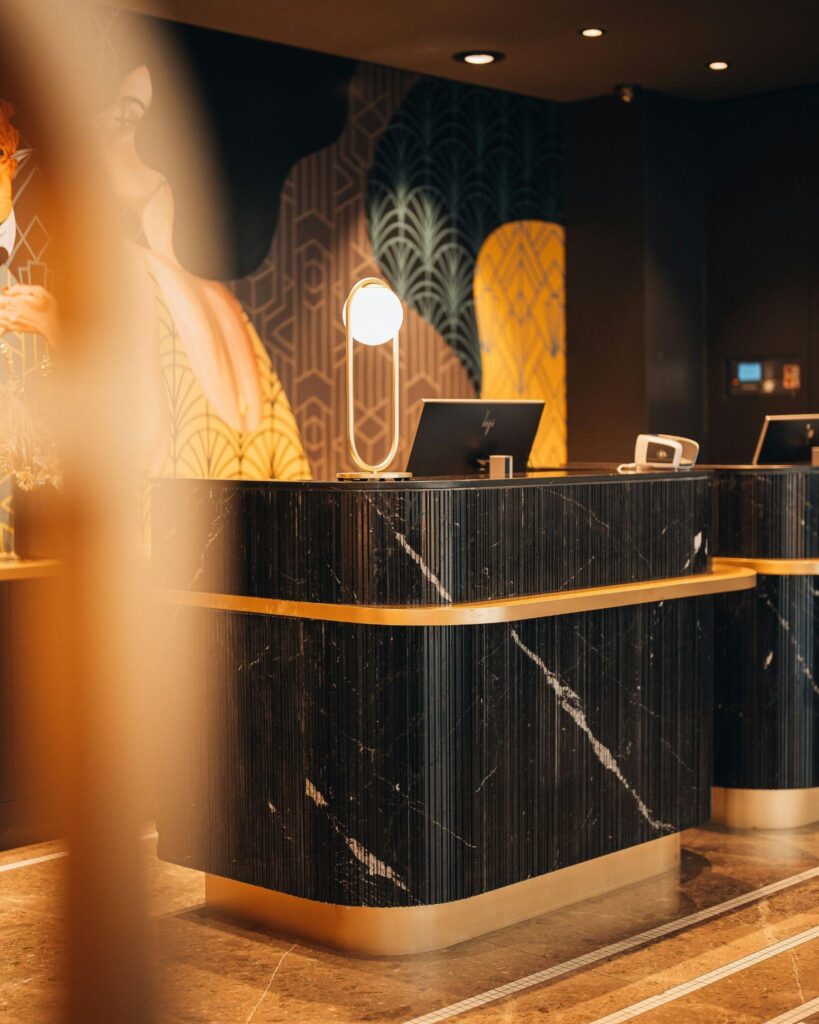
For most fans, a trip to the Super Bowl, the Olympics, or the Final Four begins and ends with the ticket. For the people who build the experience around that ticket, the game itself is only one line item on a much longer list. Hotels, flights, ground transportation, tailgates, meet-and-greets, and pre-event parties all have to arrive at the right place at the right time for the weekend to work. Jason Nissen has spent three decades in the ticket and hospitality services business organizing exactly that kind of weekend, and the lessons from that work apply to anyone trying to deliver a reliable experience in a high-demand, low-forgiveness environment.
This article looks at how major-event hospitality actually comes together, where it most often breaks down, and what separates a package that merely gets a client into the building from one they remember for years.
Why the Ticket Is the Easy Part
Access is the first problem to solve, and it is a real one. For many of the largest events in sports and entertainment, tickets are either never released to the general public or are released in very limited quantities. A hospitality specialist’s first job is to secure that access so a client can bring a child, a spouse, a parent, a friend, or a business associate to an event they could not otherwise attend.
But once the seats are secured, a second set of problems appears, and these are the ones that determine whether the client has a good trip. Host cities fill up quickly. Hotel inventory near a stadium disappears months in advance. Airports and roads operate well above normal capacity. Restaurants and venues that handle a normal Saturday with ease are stretched to their limits. Every one of those pressure points is a chance for the experience to fall apart, and none of them is covered by the ticket.
As Jason Nissen has seen over a long career in this field, the fans who show up with only a ticket often spend the weekend solving logistics instead of enjoying the event. The value of a hospitality package is that someone else has already solved them.
The Anatomy of a Complete Hospitality Package
A well-built package treats the trip as a single system rather than a list of separate bookings. In practice, that means coordinating several components so they fit together without gaps:
- Lodging positioned with the event schedule in mind, not simply the nearest available room.
- Flights timed so that arrivals and departures line up with the rest of the itinerary, including buffer for the delays that are common during peak travel windows.
- Ground transportation that moves guests between the hotel, the venue, and any hosted events on a schedule that accounts for event-day road closures and security perimeters.
- Hosted experiences such as tailgates, parties, and meet-and-greets that give the weekend shape beyond the game itself.
- On-site support so that when something changes — and something always changes — there is a person responsible for adjusting the plan.
The point of assembling these pieces together is not luxury for its own sake. It is reliability. When each piece is booked separately, a single disruption, such as a late flight or a closed road, cascades through the rest of the trip. When the pieces are planned as one itinerary, the plan can absorb that disruption.
Jason Nissen on Fan Travel Programs and Working With Teams
Some of the most demanding versions of this work involve team-affiliated fan travel. Before the NFL centralized much of this through its own on-location programs, individual teams relied on outside partners to run fan travel for out-of-town games, including trips for teams that advanced to the Super Bowl. Jason Nissen’s work included running those programs for a number of NFL teams.
Team travel programs raise the stakes in a specific way. The client is not an individual; it is an organization with its own brand to protect and thousands of fans who associate the trip with the team itself. A late bus or a mishandled hotel block is not just an inconvenience to one guest. It reflects on the franchise. That pressure forces a discipline around planning, vendor relationships, and contingency that carries over to every other type of event.
It also builds the kind of corporate partnerships that make future programs possible. Hospitality at this level is a relationship business. Hotels, transportation providers, venues, and teams all need to trust that the operator will deliver, because their names are attached to the result as well.
Scale Changes Everything
A hospitality operator who can handle a dinner reservation for four is not automatically prepared to move several hundred guests through a host city during championship week. Scale introduces problems that do not exist at smaller sizes.
Vendor capacity becomes a constraint. A single motor coach company may not have enough vehicles. A single hotel may not have enough rooms. The operator has to know which partners can actually deliver at volume and which will overpromise.
Communication becomes a challenge. Several hundred people need to know where to be and when, and they need to receive updates when the plan shifts. A simple schedule change that is easy to relay to four guests becomes a logistics exercise of its own.
Timing becomes unforgiving. During a normal weekend, a 20-minute delay is absorbed easily. During championship week, with road closures, security checkpoints, and fixed kickoff times, 20 minutes can be the difference between a guest making a hosted event and missing it entirely.
Jason Nissen’s background offers a useful lens here. A graduate of Hamilton College with a Bachelor of Science in Mathematics, he approaches event logistics with an emphasis on sequencing and dependencies: which pieces have to be locked first, which can flex, and where a buffer is worth the cost. That kind of structured thinking is what allows a large program to feel effortless to the guest while being anything but effortless behind the scenes.
Lessons From Building an Event From Scratch
Running hospitality for someone else’s event is one challenge. Building the event itself is another. For three years, Jason Nissen served as co-founder and CEO of the Minus Zero Festival in Stratton, Vermont, an electronic dance music festival that brought nationally known DJs to perform for thousands of attendees before and after a day of skiing and snowboarding.
Creating an event from nothing adds responsibilities that a hospitality operator normally inherits from the venue or the league. The ticketing and merchandise sales system had to be built and managed online. The physical entertainment space had to be constructed for both performers and attendees. Safety compliance had to be planned and verified rather than assumed.
The experience reinforces a point that applies across the industry: the parts of an event that guests never notice are usually the parts that required the most work. Nobody leaves a festival talking about how smoothly the entry process ran or how well the stage met its structural requirements. They talk about the music. But the music only happens because the invisible work was done correctly.
What Clients Should Expect From a Hospitality Partner
For individuals and companies considering a hospitality package for a major event, a few expectations are reasonable and worth stating plainly.
The partner should be transparent about what is and is not included. Ambiguity about transportation, meals, or event access is where disappointment starts.
The partner should have direct relationships with the vendors involved, not just a booking interface. When something goes wrong at 7 a.m. on game day, a relationship gets a problem solved. A confirmation number does not.
The partner should have a plan for disruption. Flights get canceled. Weather changes. Guests should know who to call and what happens next.
And the partner should understand that the goal is the experience, not the inventory. As Jason Nissen puts it, every industry is ultimately a people business, and hospitality is simply the most literal version of that idea. The tickets, hotels, and transportation are the means. A client walking away with a memory they could not have created on their own is the end.
Conclusion
Major-event hospitality rewards operators who respect complexity rather than hide from it. The ticket opens the door, but the weekend is built out of dozens of coordinated decisions about lodging, travel, timing, and hosted experiences, each of which has to hold up under the pressure of a host city running at full capacity. Jason Nissen’s three decades in the ticket and hospitality business, from NFL fan travel programs to founding and operating a festival, point to the same conclusion: the experiences that feel seamless to the guest are the ones where the hardest work was finished long before anyone arrived.