
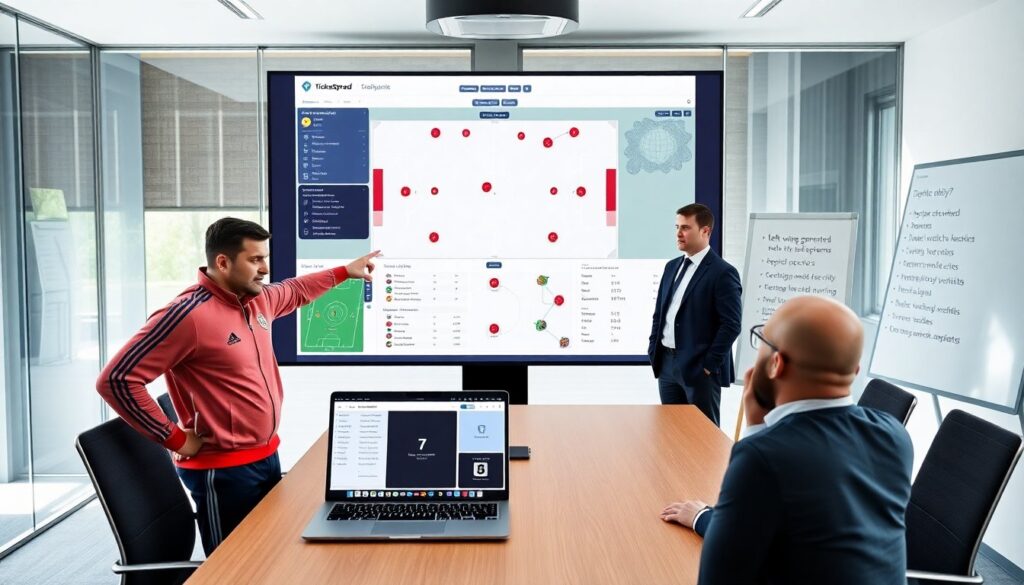
TicketSpread tactical analysis software helps teams build clearer soccer strategies. It collects event data, player tracking, and opponent scouting in one place. Coaches use TicketSpread tactical analysis software to prepare matches, test set pieces, and share plans. The guide explains core features, how the software turns data into tactics, and how teams add TicketSpread to their daily workflow.
Key Takeaways
- TicketSpread tactical analysis software centralizes soccer strategies by integrating event data, player tracking, and opponent scouting into one platform.
- Coaches use TicketSpread to prepare matches, design set pieces, and share clear tactical plans with players via synced video clips and targeted task packages.
- The software’s machine learning models detect opponent patterns and suggest effective set pieces, improving as coaches label outcomes and verify model outputs.
- TicketSpread streamlines workflow by requiring a dedicated data owner, consistent tagging, and regular device checks to ensure clean, reliable data for analysis.
- Using TicketSpread’s sequence search and training drill features helps teams translate data-driven insights into actionable practice sessions for better performance.
- Adopting TicketSpread saves time by automating data prep and sharpening tactical clarity, enabling teams to implement precise soccer strategies more consistently.
What TicketSpread Does: Core Features and Data Sources
TicketSpread tactical analysis software stores match video, player tracking, and event logs. It links live feeds to a central database. The software ingests GPS data, optical tracking, and third-party event feeds. It timestamps actions, labels players, and records pitch locations. Coaches query the database to find pressing events, transition moments, and tempo shifts.
TicketSpread provides synced video clips for each event. Users create playlists of sequences. They tag clips by tactic, player role, or opponent pattern. The software exports clips and spreadsheets for scouting reports. It generates heat maps, passing networks, and expected threat metrics.
TicketSpread supports API connections. Teams connect their wearable vendors, video providers, and league feeds. The software normalizes data into consistent schemas. It reduces time spent on cleaning files. Staff save hours each week on data preparation.
TicketSpread includes built-in machine learning models. The models detect recurring patterns and suggest candidate set pieces. The software flags unusual opponent formations and high-probability scoring channels. Coaches review model outputs and accept or reject suggestions. The system improves as coaches label outcomes.
TicketSpread stores team libraries and opponent libraries. Staff build a library of club-specific plays and mark successful outcomes. The software maintains version history for drills and set pieces. Teams reuse proven material and iterate on failed attempts.
Turning Data Into Tactics: Match Preparation, Pattern Detection, And Set-Piece Design
TicketSpread tactical analysis software helps staff convert raw data into executable plans. Coaches load a scout brief and the software filters relevant clips. The system highlights opponent weaknesses by frequency and location. Staff review the highlights and assign focus areas for training.
TicketSpread measures player tendencies. It calculates preferred passing lanes, dribble directions, and pressing triggers. The software ranks opponent players by risk and opportunity. Coaches use those ranks to assign man-marking duties or exploitation targets.
TicketSpread offers sequence search tools. Users query sequences like ‘left wing switch then near-post cross’. The software returns matching clips across multiple matches. Coaches study the returned clips to confirm opponent habits. They then design offensive patterns that force the opponent into those habits and create scoring chances.
TicketSpread supports set-piece design with a builder tool. Coaches place virtual players on a digital pitch. The tool simulates defender reactions based on historical data. The software predicts likely outcomes and success probabilities. Teams test multiple variants and choose the variant with the highest conversion probability.
TicketSpread provides training drills tied to match tasks. Coaches tag a pattern and the system creates drill progressions. Players practice the drill with video references. Staff measure drill success with objective metrics like pass completion, shot quality, and transition times. The software tracks improvement across sessions.
TicketSpread supplies pre-match packages for players. Coaches export a short video and a one-page task list. Players receive the package on their devices. They watch the clips and review the task list before warm-up. The approach reduces briefing time and increases tactical clarity.
TicketSpread integrates scouting with recruitment. The system compares prospective players against team profiles. It measures alignment on metrics such as passing range, defensive aggression, and space occupation. Staff use those comparisons to shortlist candidates who fit the tactical model.
Integrating TicketSpread Into Your Workflow: Best Practices, Common Pitfalls, And Coaches’ Checklist
TicketSpread tactical analysis software works best when teams follow clear steps. First, assign one staff member as data owner. The owner keeps data organized and enforces naming rules. Second, define a short set of tags for plays and outcomes. The team uses the same tags to keep library searches reliable.
TicketSpread needs regular labeling to improve model suggestions. Staff label key events after each match. The process takes time at first. It becomes faster as the team adopts standardized labels. The software learns and returns better pattern suggestions.
Common pitfalls include overreliance on automatic output and poor data hygiene. Coaches should treat model outputs as inputs, not final plans. Staff should verify suggestions with video review. Teams should also audit data sources monthly to avoid gaps in tracking.
TicketSpread requires device and feed checks. Staff verify camera angles and GPS sync before match day. They run a quick end-to-end test to confirm clips and feeds reach the platform. These checks prevent missing data and last-minute scrambling.
TicketSpread works best with short review cycles. Coaches run a focused review session two days before a match. They keep reviews under 30 minutes and assign two tactical tasks for training. Players then practice those tasks in the next session. This tight loop reinforces transfer from analysis to practice.
Coaches use the following checklist when they adopt TicketSpread:
- Appoint a data owner who enforces naming and tags.
- Connect all data feeds and confirm API sync.
- Label decisive events after each match.
- Run device checks 24 hours before kickoff.
- Produce a 3-minute player package one day before the match.
- Limit pre-match tactical tasks to two clear actions.
TicketSpread saves time when teams keep routines simple. Staff get faster insights and players get clearer tasks. The software then helps teams deliver consistent tactical performance.